Tension Load Cells
What is a Tension Load Cell?
Tension load cells are measuring devices that predominantly measure tension and pull force. Openings at each end of the load cell allow for easy connection to shackles, wire rope, or other rigging. Some tension load cells are “S-type” load cells due to their shape and can be used to measure either tension or compression. Tension load cells are temperature compensated, environmentally sealed, and can be used for static and dynamic measurements. They are essential for ensuring worker and equipment safety while moving heavy loads.
Tension load cells are temperature compensated, environmentally sealed, and can be used for static and dynamic measurements. They are essential for ensuring worker and equipment safety while moving heavy loads.
Massload Tension Load Cells
All Massload’s tension load cells are made with the highest quality materials and manufactured through our specialized Quality Management System. Our in house engineering team will work with you to guarantee the development of a tension link that meets all your requirements.
Our tension links are designed using the latest technology in 3D modeling and FEA analysis.
Custom tension links are available in capacities up to, and exceeding, one million pounds and can be designed to meet industrial safety factors of up to 1000% overload protection. Millivolt output or signal conditioning utilizing a 4-20 mA output for PLC interface are available.
Contact us today and learn what Massload can do for you.
Highlights
Benefits of Tension Load Cells
- Made in Canada tension load cell for crane, winching, lifting, hanging scale applications
- Rugged design for resistance to side loading
- Capacities: 10,000 lbs, 25,000 lbs, 50,000 lbs, 75,000 lbs, 100,000 lbs, 150,000 lbs, 250,000 lbs
- Tension load accurate to o.1% FS with multi-point calibration
- Custom tension capacity available
- Light weight and portable
- Small size for reduced head space
- Output/display options include cabled, wireless, 4-20mA, 0-10V, +/- 10V, 0-5V

Product Details
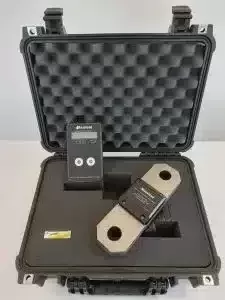
Tension Load Cell Features
Openings at each end of the crane load cell allow for easy connection to shackles, wire rope, or other rigging. These hanging scales are available in capacities ranging from 10,000 lbs to over 250,000 lbs. Custom dynamometer capacity, size and safety factor is also available upon request. Each tension load cell is temperature compensated and environmentally sealed.
High-Capacity Load Cell Applications
Tension links are designed to measure the tension force experienced during heavy lifting. While they have many applications, the most popular include:
- Cranes
- Winching systems
- Towing
- Load lifting
- Hanging scale applications

Images
PRODUCT SPECIFICATIONS
| Capacities (pounds) | 10,000 lbs, 25,000 lbs, 50,000 lbs, 100,000 lbs, 150,000 lbs, 250,000 lbs; |
|---|---|
| Accuracy | Tension load accurate to 0.1% FS with multi-point calibration |
| Safe Overload | 200% full scale safe overload |
| Ultimate Overload | 400% full scale ultimate overload |
| Full Scale Ouput | 2 mV/V nominal |
| Maximum Excitation | 10 volts DC |
| Operating Temp | -40°C to +80°C |
| Compensated Temp | -10°C to +40°C |
| Sealing Standard | IP-67 protected from dust and high pressure jets of water |
| Material | Electroless nickel coated high strength alloy steel |
| Bridge Resistance | 350 Ohm |
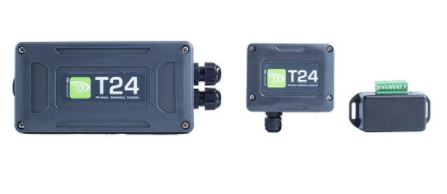
2.4 GHZ WIRELESS TRANSMITERS
Easily convert a regular cabled tension link to wireless tension link with an external 2.4Ghz wireless transmitter unit in the following sizes:
T24-ACM-SA powered by 2 D cell batteries and provides the longest run time
T24-ACMi-SA powered by 2 AA cell batteries
T24-ACMm-SA powered by an external 3V DC supply
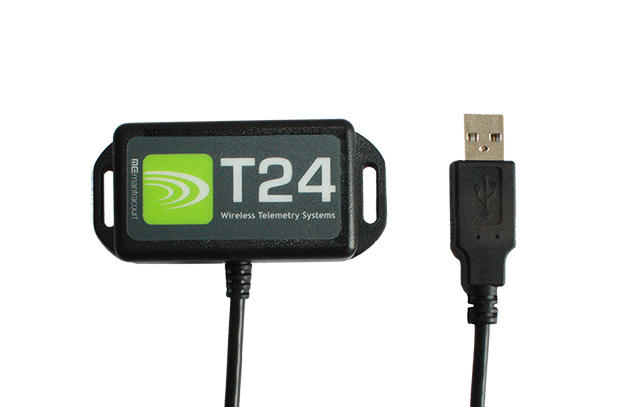
2.4 GHZ WIRELESS BASE STATION RECEIVER
Capture your wireless signal directly to a PC via the T24-BSu USB base station receiver and display your data on the free T24LOG100 software.
2.4 GHZ WIRELESS TENSION LINK DYNAMOMETER
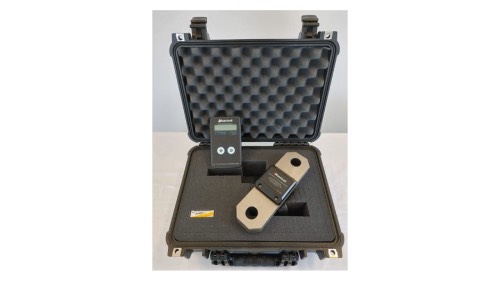
Tension load is displayed via external indicator that communicates wirelessly with the tension link. Our new 2.4 Ghz wireless crane scales have a transmitter and battery box attached to the load cell to communicate with the indicator (see wireless digital indicator). The scale is powered by 2 AA batteries providing up to 500 hours of continuous use. The tension meter enters sleep mode when not in use to prolong battery life and has an open field wireless range of 2000 ft at 3m height.
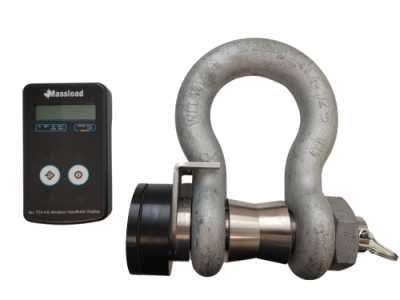
2.4GHZ WIRELESS LOAD SHACKLE
Massload wireless load shackles are based on the industry standard Crosby shackle and come in capacities ranging from 8.5t to 55t. Equipped with clip lock pin for fast assembly and dissassembly. Our 2.4Ghz wireless transmitters can provide a open field range up to 2000 ft at 3m height and can be display on a single channel or multi-channel hand held receivers.
900 MHZ WIRELESS TENSION LINK DYNAMOMETER
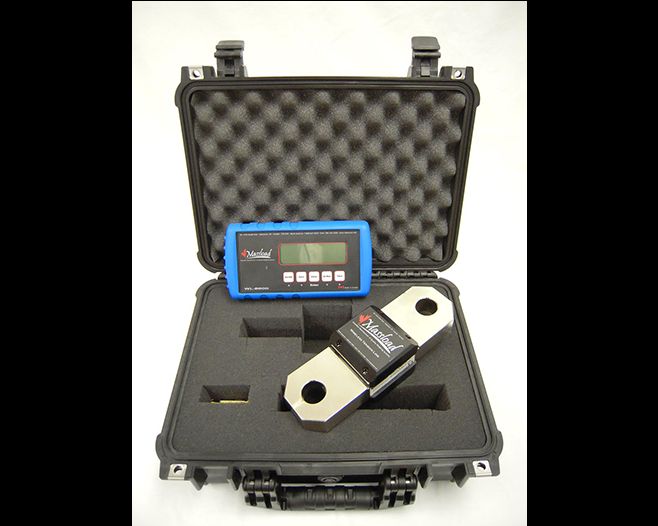
Massload regrets to announce that the WL-700 900 Mhz wireless tension link with WL-8600 LCD display was discontinued in 2020 and has been replaced by our 2.4Ghz WL-724 wireless tension link family. Parts will be available till the end of 2022 while stocks last. Massload is offering an economical upgrade by converting the legacy wireless tension link to the new 2.4Ghz wireless platform. This can be conveniently performed at re-calibration or repair.
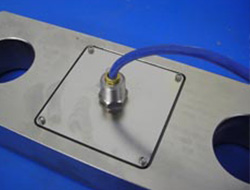
WIRED LINK (HARD CONNECT)
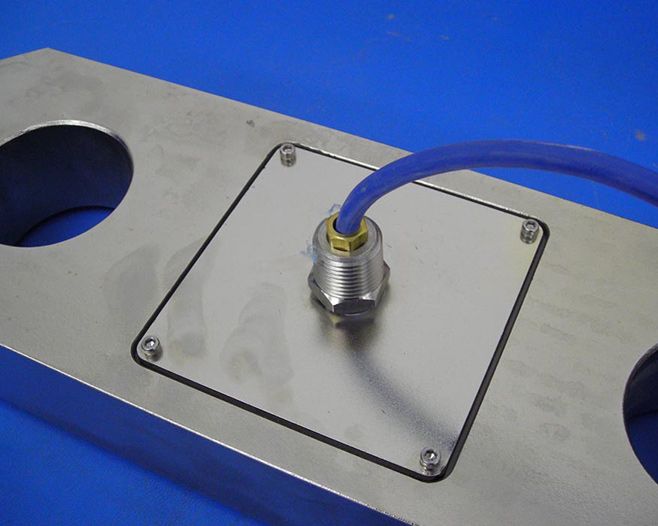
Tension measurement can be displayed by an indicator via wired connection (see wired digital indicator) . The cable connection between the crane load cell and display can be a seal-over hard connect. This is suitable for installations where the dynamometer is not expected to be disconnected from the indicator. Standard cable length is 40 ft but custom cable lengths are available.
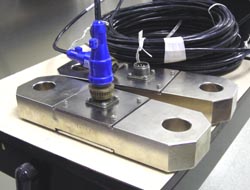
WIRED LINK (MILITARY CONNECT)
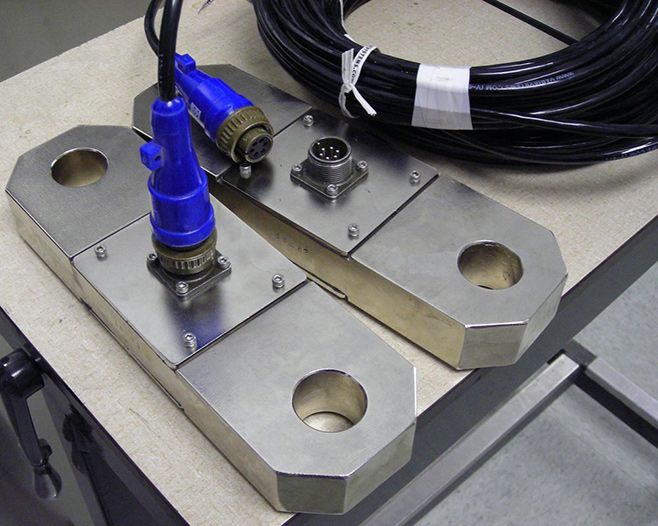
External indicators can also be connected to the tension load cell via 4-pin military style quick-disconnect. This allows for easy disconnection and reconnection from the load cell should the crane scale ever need to be moved, repaired, or stored. The drawback of military connectors is that their sealing standard is not as high as hard-wired connections. Quick Disconnect cable comes in 10 ft, 20 ft, and 50 ft lengths.
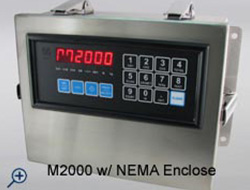
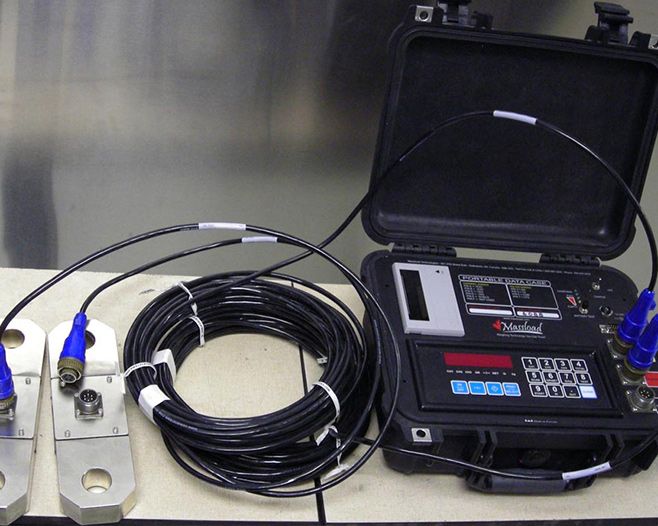
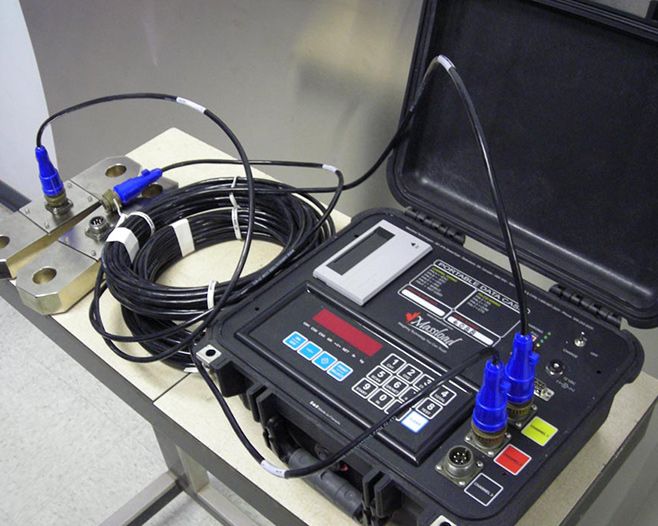
M2000 LOAD CELL INDICATOR
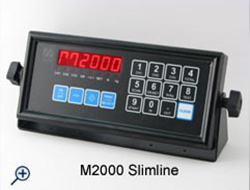
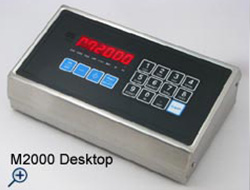
The recommended indicator for tension applications is the M2000. If the crane is located outside, the M2000 should be purchased in a NEMA enclosure (see left photo) to protect against dust and water. Various enclosures are available (see below images) and more details about the M2000 are available on the Instrument Solutions website.
SETPOINT OPTION CARD
The M2000 is available with a setpoint option card. These are overload detection and protection devices. Setpoints utilize solid state relays that can be used to trigger alarms or switch devices (i.e. motors) on or off at specified weights. When ordering the Setpoint option the type of device (AC or DC) being switched must be specified. Setpoints are frequently used in digital hanging crane scale applications.
PARTS OF LINE SOFTWARE
The M2000 can be loaded with a special program that allows a hanging crane scale operator to adjust the indicator for multiple “Parts of Line”. The program is configurable for one to twelve parts of line and the software will be provided free of charge when needed with the purchase of an M2000 indicator and a crane scale dynamometer.
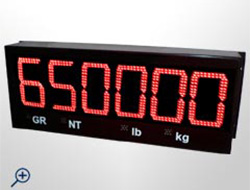
REMOTE SCORE BOARD
Remote score boards are often referred to as “remote displays”. This type of display must be used in conjunction with a digital indicator equipped with a serial output. The remote display mirrors what is displayed on the weight indicator. They are used in applications where weighing information needs to be seen at a distance from the indicator. Score boards are available in 2″ (50 ft visibility), 4.5″ (250 ft visibility) and 6.5″ (300+ ft visibility) lettering.
4-20 mA SIGNAL CONVERTER
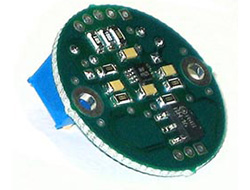
We can supply 4-20 mA ouput versus standard mV/V signal. The design incorporates a load cell shield connection and polarity insensitive current loop connections. It is not susceptible to damage from shorting loop leads together or to ground during operation and is specifically designed for ESD hazardous environments. These converters are ideal for systems that require a PLC.
Please click on the following links to download or view additional information:
- Brochure Massload Tension Link Tech Sheet
Testimonials


Frequently Asked Questions
How Do Tension Load Cells Work?
Tension load cells use a four-step measurement process:
- When tensile force is applied, the load cell body deforms slightly
- Strain gauges attached to the body detect this deformation, causing their electrical resistance to change
- A Wheatstone bridge circuit converts the resistance change into a measurable electrical signal
- Electronic equipment interprets this signal to determine the precise tensile force being applied
What Is Strain Gauge Technology and Why Is It Used in Tension Load Cells?
Strain gauge technology is the primary measurement method used in tension load cells. Strain gauges are sensors whose electrical resistance changes proportionally when stretched or compressed.
When mounted on the load cell body, they deform along with it under tension, creating a resistance change that directly correlates to the applied force. This technology provides highly accurate, reliable force measurements essential for safety-critical lifting and weighing applications.
Why Are Some Tension Load Cells Called “S-Type” and What’s the Advantage?
Not all tension load cells are S-type. ‘S-type’ refers to specific load cells named for their characteristic S-shaped body design. This shape helps align the mounting points along the central axis, which is particularly beneficial in suspended applications like crane scales and overhead lifting.
The geometry ensures proper load distribution and accurate measurements while minimizing side-loading effects that could compromise accuracy or damage the load cell. They are a popular choice for both tension and compression use cases.
What Are Tension Load Cells Used For?
Tension load cells serve five primary application categories:
- Hoisting and Lifting Operations: Ensuring cranes and hoists don’t overload by accurately measuring lifted weight
- Material Handling: Monitoring and controlling tension in web, wire, or cable during manufacturing
- Structural Testing: Measuring the tensile strength of materials and structures
- Crane Scales: Providing accurate weight measurements in suspended weighing applications
- Testing Equipment: Measuring tensile forces applied to samples in laboratory and quality control settings
- Vehicle Recovery: Monitoring towing forces to ensure safe and effective vehicle recovery operations